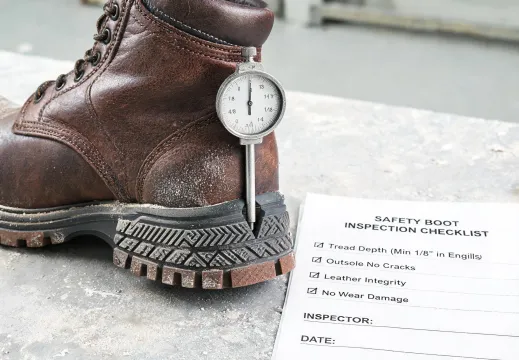
Outsole and surface review
We compare concrete, gravel, mud, wet ladders, oily shop floors, and road work so traction language is not treated as one generic feature.
HAIX is known by many buyers through searches for police boots, tactical boots, work boots, chainsaw boots, and structural firefighting boots. This site presents HAIX Supply as a practical B2B program resource: a place for safety managers and procurement teams to organize the questions behind the product names.
"A good boot program respects both the standard on paper and the person who has to wear the boot through a full shift."
That viewpoint shapes the HAIX Supply approach. We do not describe any boot as standards-aligned protection, and we do not turn a product label into a jobsite guarantee. Instead, we help teams compare footwear families against a defined context: surfaces, climate, duty cycle, toe exposure, electrical hazard work, ladder use, fireground or forestry tasks, public safety mobility, and the comfort feedback that can affect adoption.
For EHS leaders, the value is a more defensible selection note. For purchasing teams, the value is a cleaner list of styles, sizes, alternates, and replacement timing. For supervisors, the value is less back-and-forth when a worker asks why a certain boot family was chosen. This makes the buying process calmer, especially when multiple stations, shifts, or departments need to coordinate around the same issue window.
We compare concrete, gravel, mud, wet ladders, oily shop floors, and road work so traction language is not treated as one generic feature.
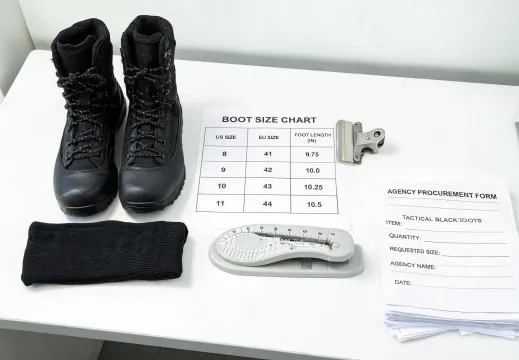
Width, instep, break-in tolerance, shift length, sock thickness, and gender size availability are captured before a buyer commits to a narrow list.
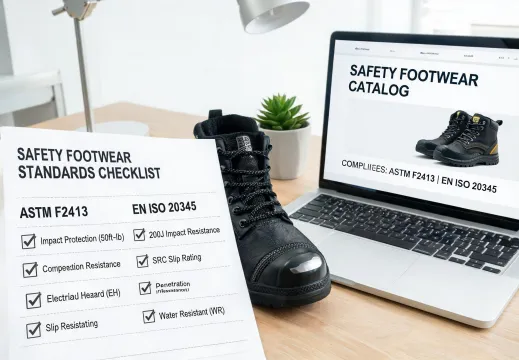
ASTM F2413 I/75 C/75, EH marking, EN ISO 20345, NFPA references, and care instructions are handled as documentation points for review.
A guide for comparing patrol, tactical, EMS, and station boot choices against mobility, ankle support, waterproofing, and shift length.
Request worksheetA concise checklist for ASTM F2413 I/75 C/75, EH, toe type, puncture needs, EN ISO 20345, and internal approval notes.
Request checklistA practical note for cleaning, drying, outsole inspection, boot rotation, and replacement timing without encouraging unsafe overuse.
Request noteSend the approved styles, current complaints, work environments, and expected quantities. We will help identify where the list is too broad, where a standard reference needs clarification, and where workers may need more fit choice.
Share work roles, required safety marks, preferred styles, and rollout timing. A footwear program advisor will respond with practical next steps.